
Office Based vs Remote Offshore Staff: Key Differences

May 22, 2026
Office-based offshore staff work in structured environments, while remote teams operate independently, with each model suited to different business needs and workflows.

Office-based vs Remote Offshore Staff: Key Differences

Two of the most common outsourcing models today are office-based offshore staff and remote  offshore staff. At a basic level, the difference is simple office-based staff operate within a structured, professionally managed environment, while remote staff work independently from various locations, often from home.

While this distinction seems straightforward, the gap between these two models becomes far more significant once businesses begin exploring offshore staffing. Factors like accountability, infrastructure, security, and long-term reliability can greatly impact outcomes. This guide breaks down the key differences, highlights where each model works best, and outlines practical considerations for building a dependable offshore team.

What is office based offshore staff?

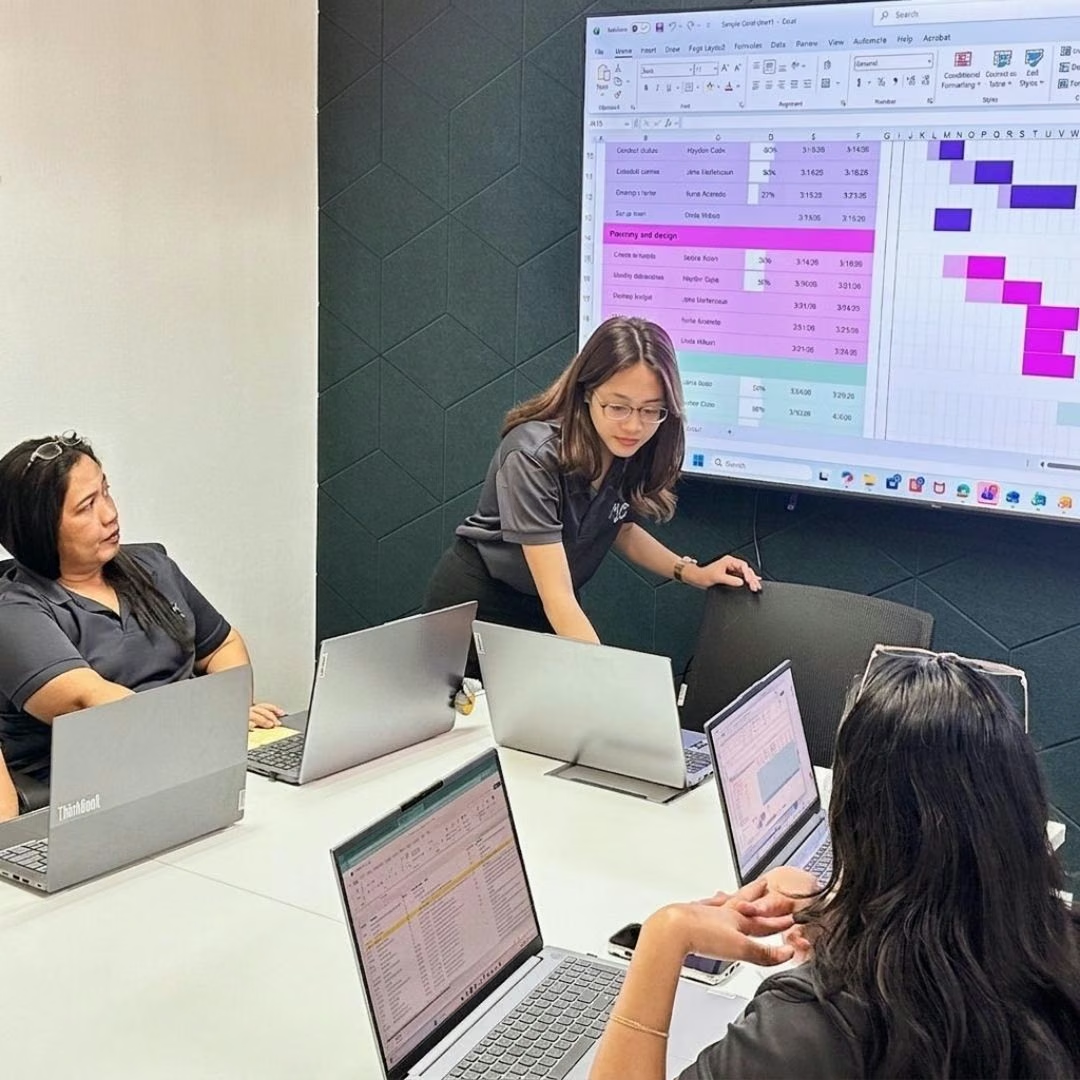
Office-based offshore staff are professionals who work from a dedicated office facility managed by an outsourcing provider. These employees operate in a controlled, professional environment with access to company-grade infrastructure such as high-speed internet, secure networks, backup power, and IT support.

In this model, staff are supported by on-site management teams who handle supervision, attendance, HR processes, and performance monitoring. This structure ensures consistency, accountability, and alignment with your business operations.

For businesses, this setup offers greater visibility and control compared to remote staffing. It also reduces the risks associated with equipment failure, unreliable internet, and security gaps. Office-based offshore staffing is often preferred by companies that require dependable workflows, data protection, and team integration.

What is a remote offshore staff?

Remote offshore staff, on the other hand, work independently from home or other non-centralised locations. They typically use their own equipment and internet connection, and operate without a physical office or on-ground supervision.

This model offers flexibility and can be a cost-effective way to access global talent. Businesses can scale quickly without the overhead of office facilities, making remote staffing appealing for startups or short-term projects.

However, remote setups rely heavily on trust, communication, and internal management systems. Business owners are responsible for overseeing performance, ensuring productivity, and maintaining team engagement—often across different time zones and varying work environments.

While remote staffing can work well for certain roles, it may present challenges in consistency, accountability, and long-term team development.

Office based vs remote offshore staff

The practical differences between office-based and remote offshore staff come down to structure, reliability, and long-term value.

1. Supervision and accountability
Office-based setups include on-the-ground management, attendance tracking, and performance support. If something goes wrong, someone is there to resolve it quickly. Remote setups rely entirely on you to provide oversight, which can be difficult to maintain across time zones without visibility into the work environment.

2. Infrastructure and equipment
Staff in a professional office receive workstations, monitors, reliable internet, backup power, and IT support. Remote workers use their own equipment, which varies in quality. When internet issues or hardware failures occur, resolution often depends on the individual.

3. Security and data protection
Professional office environments have controlled access, secure networks, and data handling protocols. For roles involving finance, project data, or client information, this is critical. Remote setups offer far less control over how and where sensitive data is accessed.

4. Staff retention and development
Office environments foster team culture, structured training, and career growth opportunities, which improve retention. Remote workers often operate independently and may juggle multiple clients, which can lead to inconsistency over time.

5. Team integration and communication
Office-based staff collaborate within a structured environment and benefit from regular supervision and team interaction. This makes it easier to integrate them into your workflows. Remote workers can be more isolated, which may impact collaboration and alignment.

Industries That Benefit from Office-Based Offshore Staffing

Office-based offshore staffing is ideal for industries that rely on structured workflows, consistency, and secure, well-managed environments. These sectors benefit most from having dedicated teams supported by on-site management and infrastructure:

  • Construction and project-based businesses
  • Engineering and technical services
  • Trades and service-based businesses
  • Finance and professional services

Industries That Benefit from Remote Offshore Staffing

Remote offshore staffing works best for industries that prioritise flexibility, scalability, and output-based work that can be managed digitally with minimal supervision. These industries typically operate well with distributed teams:

  • Digital marketing and content creation
  • Graphic design and creative services
  • Software development and IT
  • Startups and e-commerce businesses

How to Choose the Right Offshore Staffing Model

Choosing between office-based and remote offshore staffing depends on your business priorities, the nature of the work, and your ability to manage offshore teams. If your business requires consistent output, strong oversight, data security, and long-term team integration, an office-based model is often the better fit. It provides the structure and support needed to build a reliable offshore function.

On the other hand, if your priority is flexibility, rapid scaling, and lower upfront costs—and you have the internal capacity to manage remote staff effectively—a remote model may be suitable. Many businesses also adopt a hybrid approach, using office-based staff for core functions and remote workers for more flexible or project-based roles.

Final Thought

Both office-based offshore staff and remote teams offer valuable opportunities for businesses looking to scale with global talent. The key is understanding that each model comes with its own strengths, risks, and operational implications. By partnering with providers like Lynk Global, businesses can build structured, reliable offshore teams that align with their operations and long-term goals.

Lynk Global is an outsourcing and offshore staffing company that helps businesses build dedicated teams in the Philippines. They specialise in providing offshore staff across both office-based and remote setups, giving businesses the flexibility to choose a model that best suits their workflow while ensuring the right level of support, structure, and scalability.

Ready to see how this works

Book a call with our team to discuss your specific needs.