
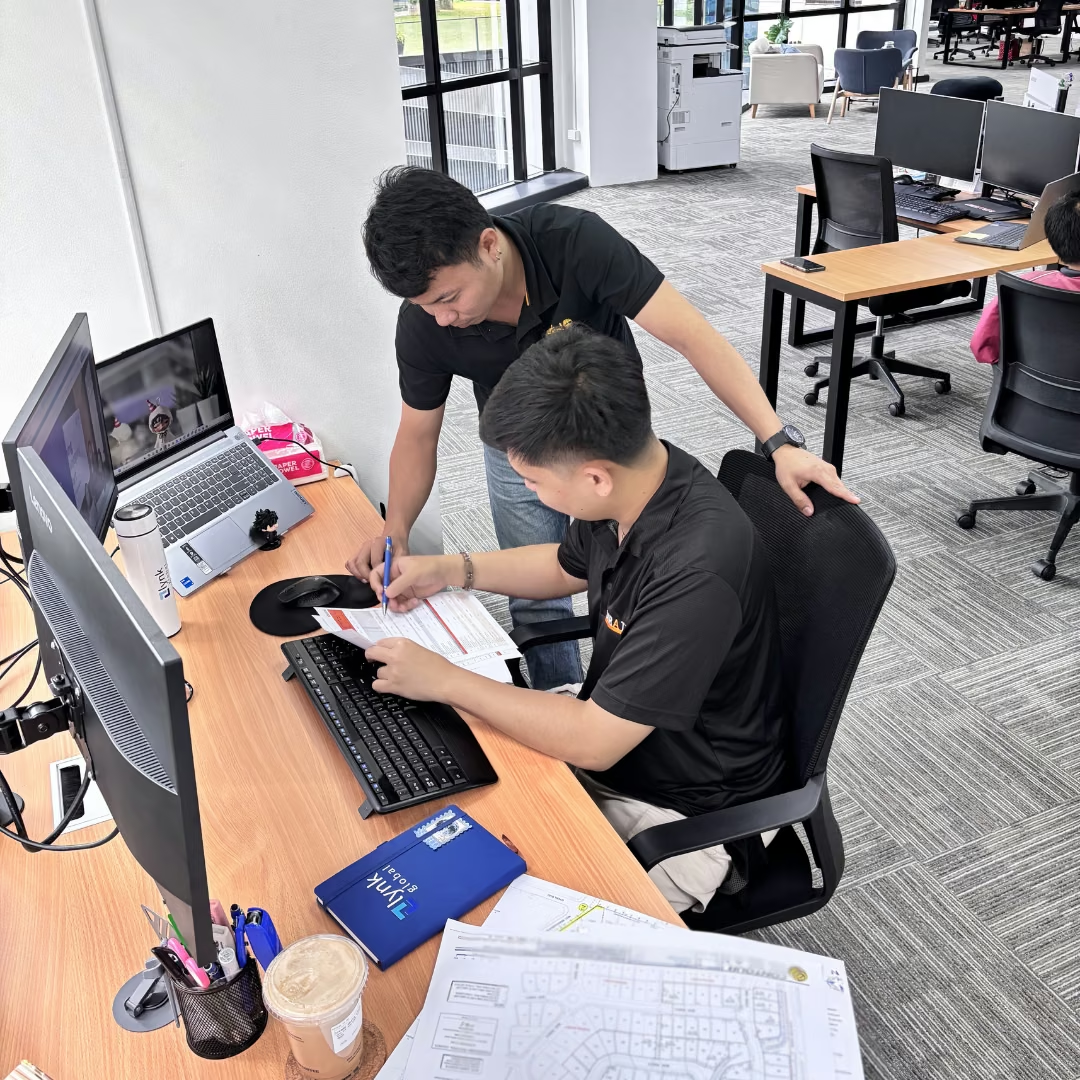
Offshore Staffing for Construction Companies and Contractors

May 2, 2026
Construction offshore staffing provides dedicated remote professionals for estimating, drafting and admin roles — typically 40-60% less than local hires.

Offshore Staffing for Construction Companies and Contractors

Finding good people for estimating, drafting and admin roles has become one of the harder parts of running a construction business in Australia. The local talent pool is tight, costs keep climbing, and the pressure to deliver projects on time does not ease up while you wait to fill a vacancy.

Offshore staffing offers a practical way to build capacity without the delays and expense of local recruitment. This guide covers how construction companies are using dedicated offshore staff for back-office and skilled support roles, what functions work well remotely, and how to set up an arrangement that actually delivers long-term value.

What is offshore staffing for construction

Offshore construction staffing means hiring remote professionals based overseas to handle technical, administrative and project management tasks. Common functions include cost estimation, drafting, scheduling and document control. Staff typically work from a professional office in the Philippines and become dedicated team members who work exclusively for your business.

This arrangement differs from generic outsourcing or freelance platforms in one important way. Rather than task-based work with variable availability, offshore staffing builds long-term capacity with people who learn your systems, understand your standards and grow with your business over time.

One clarification worth making early: offshore staffing applies to office-based roles only. On-site labour, trades and physical construction work remain local. What moves offshore are the support functions that keep projects moving forward.

Why construction companies hire offshore staff

The pressures facing Australian construction businesses have made offshore staffing increasingly practical. With workforce shortfalls projected to reach 300,000 by 2027, local talent shortages, rising employment costs and stretched internal teams are common across the industry, and many businesses are looking for structured ways to add capacity.

1. Local talent shortages in Australia

Finding qualified administration, estimating and drafting staff locally has become genuinely difficult. Competition for skilled professionals is intense across the construction sector, and many businesses wait months to fill critical back-office roles. The talent pool simply has not kept pace with demand with job vacancies up 33.5% from pre-COVID levels.

2. Rising labour costs and employment overheads

The full cost of a local hire extends well beyond salary. Superannuation, leave entitlements, office space, equipment and training all add up quickly. When you factor in recruitment costs and the time spent onboarding, the total investment becomes significant.

Offshore staffing provides access to skilled support at a lower total cost. The savings vary depending on the role and provider, but many businesses see reductions of 40 to 60 percent compared to equivalent local hires.

3. Capacity constraints on projects

When back-office support is stretched thin, projects slow down. Estimators get pulled in too many directions. Administrative tasks pile up. Project managers end up doing work below their pay grade because there is no one else to handle it.

Offshore staff can relieve bottlenecks in estimating, drafting and administration without adding to local headcount. The result is faster turnaround on quotes, drawings and documentation.

4. Scaling support without long-term risk

Offshore staffing allows construction companies to add capacity without the long-term financial commitment of a permanent local employee. This flexibility is particularly useful when project pipelines fluctuate or when you want to test a new role before committing locally.

Construction roles you can staff offshore

Offshore staffing works best for office-based, process-driven roles that do not require a physical presence on site. The following functions are well suited to offshore delivery.

1. Estimating and quantity surveying

Offshore estimators can handle takeoffs, cost estimates, bills of quantities and tender documentation. With proper training, they can work to Australian standards and local pricing structures. Many construction businesses start with estimating support because the workload is predictable and the impact on capacity is immediate.

2. Drafting and CAD support

AutoCAD and Revit drafting are highly transferable skills. Offshore drafters can produce shop drawings, design documentation and technical drawings under the direction of your local team. The work is visual, measurable and easy to review remotely.

3. Project administration and coordination

Document control, scheduling support, subcontractor communication and progress reporting are all well suited to offshore delivery.

4. Finance, bookkeeping and accounts

Accounts payable, invoicing, payroll processing and job costing can all be handled offshore. Staff can be trained on Australian accounting software such as Xero and MYOB. Many businesses find that finance support is one of the easiest functions to transition because the processes are well defined.

5. General administration and data entry

Email management, calendar coordination, CRM updates and general office support are straightforward to delegate once systems and expectations are clear. Administrative support often frees up local staff to focus on higher-value work.

How offshore recruitment works for construction businesses

The recruitment process is a partnership between you and the offshore provider. You define the role, and the provider handles recruitment, employment and ongoing support. The typical timeframe from role briefing to start date is two to four weeks, depending on the complexity of the position. More specialised roles may take slightly longer.

Benefits of offshore recruitment for construction

The advantages of offshore staffing extend beyond cost savings, though cost is often the starting point for many businesses.

1. Cost savings without compromising standards

A well-structured offshore arrangement can reduce total employment costs significantly while maintaining quality. The key is a professional recruitment process and a proper office environment, not a race to the bottom on price. Savings typically come from lower labour costs in the Philippines, combined with reduced overheads for office space and equipment.

2. Faster hiring than local recruitment

Offshore recruitment services can often fill roles faster than local hiring cycles. Access to a larger talent pool and established screening processes make a real difference. Where local recruitment might take two to three months, offshore recruitment often takes two to four weeks.

3. Improved project timelines and throughput

With more back-office capacity, your team can turn around estimates, drawings and administrative tasks faster. Projects move forward without the bottlenecks that come from stretched internal resources. The impact is often felt within the first few weeks of a new hire starting.

4. Access to skilled and reliable support

The Philippines has a strong talent pool for construction support roles. English proficiency is ranked 28th globally, technical training is solid, and the professional work culture aligns well with Australian expectations. Many offshore staff have experience working with international clients and are familiar with Australian standards.

5. Time zone alignment with offshore construction staff

Manila is only two to three hours behind Australian Eastern time, depending on daylight saving. This alignment allows offshore staff to work during your standard business day or with significant overlap. Real-time communication becomes practical. Same-day turnaround on tasks is achievable and genuine integration with your local team is possible because you are working at the same time, not passing work back and forth across a 12-hour gap. This time zone advantage is one of the reasons the Philippines has become a popular location for Australian businesses looking at offshore staffing.

Build long-term capacity with dedicated offshore staff

Offshore staffing is a long-term strategy for construction businesses facing hiring pressure and capacity constraints. It works best when approached as a way to build a more capable team, not as a short-term cost-cutting measure.

Lynk Global provides dedicated offshore staff based in a professional office environment in Manila. The model is built for construction companies that want reliable, integrated support across estimating, drafting, administration, finance and project coordination. Get in touch to learn how this model can work for your business.

FAQs about offshore staffing for construction

How long does it take to hire offshore construction staff?

The typical recruitment process takes two to four weeks from role briefing to start date. More specialised roles may take slightly longer depending on the requirements.

What software can offshore construction staff use?

Offshore staff can use the same software as your local team. Common examples include estimating tools, CAD programs like AutoCAD and Revit, accounting platforms like Xero or MYOB, and project management systems.

How do offshore estimators learn Australian construction standards?

Offshore estimators receive training on Australian construction methods, pricing and standards during onboarding. Ongoing guidance from your team ensures their work aligns with local requirements. Most estimators pick up Australian standards within the first few months.

What happens if an offshore staff member resigns?

A reputable offshore staffing agency manages the replacement process. Sourcing, screening and onboarding a new team member typically takes two to four weeks, minimising disruption to your operations.

Is offshore staffing suitable for small construction businesses?

Yes. Offshore staffing provides access to support in areas like admin, estimating or finance without the high cost of a full-time local hire. Many small builders and contractors find it a practical way to add capacity when local hiring is not feasible.

Ready to see how this works

Book a call with our team to discuss your specific needs.