
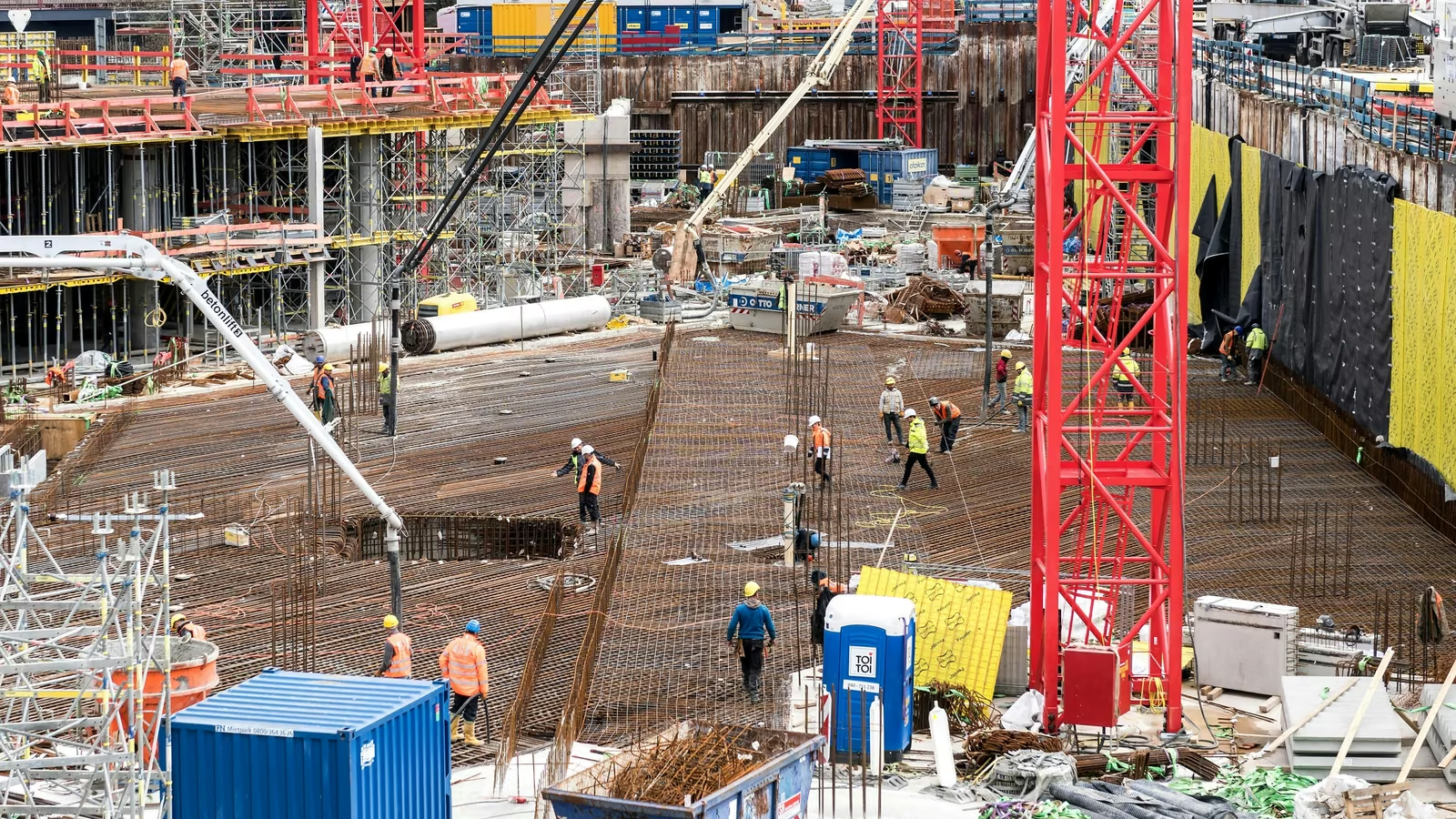
When people are unavailable, identify which activities are actually holding up the programme. Site labour, technical review and office support require different responses. The practical options below address those different constraints.
How severe is the construction labour shortage right now
You post a job ad for a carpenter. Two weeks go by. Three applications come in, and none of them have the experience you're looking for. Meanwhile, your subcontractor list is getting shorter because everyone's booked out for months.
The construction industry is facing a significant workforce gap, with an estimated 349,000 net new workers needed in 2026 alone. The number of workers available doesn't match the number of positions that require filling. This mismatch affects every level, labourers, carpenters, electricians, plumbers, and heavy equipment operators are all in short supply.
A labour shortage in construction means there aren't enough qualified people to do the work that's available. It's not just about finding warm bodies. The gap is especially wide for skilled trades, where workers require years of training and certification before they can operate independently.
92% of construction firms report difficulty filling roles. The talent pool has shrunk, and every builder, contractor, and developer is competing for the same limited group of qualified tradespeople.
How labour shortages in construction cause project delays
You've won a contract. The timeline is locked in. Your crews are scheduled. Then your framing team gets poached by a competitor offering better rates. Your electrician can't start for another six weeks. A twelve-week project is now looking more like eighteen.
Fewer workers means slower progress on-site. Delays compound as each trade waits on the one before it.
The pattern tends to follow a few common triggers:
- Understaffed crews: Work that would normally take days stretches into weeks because you're running with half the people you planned for.
- Scheduling bottlenecks: Subcontractors aren't available when you're ready for them, so your project sits idle.
- Quality control gaps: Overworked teams rush to meet deadlines, leading to defects and rework that eat into your timeline.
These aren't one-off problems. They're systemic issues that show up project after project when the labour market is tight.
Financial impact of the construction workforce shortage
The cost of workforce gaps goes beyond wages. When you can't find workers, the financial pressure shows up in places you might not expect.
Rising labour costs across the industry
Competition for workers drives up hourly rates. If you want to attract and keep good tradespeople, you're paying more than you were a few years ago. Recruitment costs have climbed too, advertising, agency fees, and the time spent interviewing candidates who don't work out.
What you might have paid a qualified carpenter in 2021 looks very different to what you're offering now. And if you're not matching market rates, you're losing people to competitors who will.
Increased overhead from extended project timelines
Longer projects mean more of everything. Equipment rental, site supervision, insurance, permits, all of it compounds the longer a job runs.
- Equipment rental: Extended hire periods for machinery and tools add up quickly.
- Site supervision: More hours managing fewer workers across a longer timeline.
- Insurance and permits: Ongoing costs that don't pause when your project slows down.
A project that runs four weeks over schedule doesn't just cost you four weeks of labour. It costs you four weeks of every overhead line item attached to that site.
Margin compression on fixed-price contracts
If you've quoted a fixed price and your labour costs rise mid-project, that margin disappears fast. You can't go back to the client and ask for more money because your framer's rates went up.
This squeeze hits builders locked into contracts signed months ago particularly hard. The price was set based on assumptions about labour availability and cost that no longer hold true.
Construction labour shortage solutions that protect your timelines
You can't control the labour market. But you can control how your business responds to it.
1. Outsource administrative and back-office functions
Every hour your site supervisor spends on invoicing or payroll is an hour they're not managing the job. Offloading bookkeeping, accounts payable, timesheet processing, and estimating frees up your internal team to focus on project delivery.
Dedicated offshore staffing can add capacity for recurring office-based work. Lynk recruits and employs the person in the Philippines and provides the Manila office, payroll, HR and local support. Your business still manages their work, provides process training and reviews outputs.
2. Streamline estimating and tender processes
Bottlenecks in your quoting process slow down your entire pipeline. Efficient take-offs and bid preparation mean you can respond to opportunities faster and more accurately.
Outsourced construction support can handle AutoCAD work, quantity take-offs, and tender proposals. This gives you capacity to quote more jobs without pulling your project managers off-site.
3. Adopt technology to boost operational efficiency
The right tools reduce manual work and help smaller teams do more:
- Project management software: Centralise tasks, timelines, and communication in one place.
- Digital take-off tools: Speed up estimating and reduce errors.
- Automated payroll systems: Cut admin time and improve accuracy.
Platforms like Buildxact, Procore, and integrated accounting tools can make a meaningful difference when you're running lean.
4. Invest in training and apprenticeship programs
Developing talent internally addresses long-term gaps. Partnering with local schools, TAFE programs, and group training organisations builds your future workforce while contributing to the industry.
It's a slower solution, but it's one of the few that actually increases the supply of workers rather than just competing for existing ones.
5. Improve recruitment and retention strategies
Competitive pay matters, but it's not the only lever. Clear career paths, a decent workplace culture, and flexibility where possible all help you keep the people you've got.
Retention is often cheaper than recruitment. Losing a trained worker and replacing them costs time, money, and momentum.
How to keep projects on schedule despite workforce gaps
When you're short-staffed, the difference between reactive and proactive approaches becomes obvious.
Challenge
Reactive Response
Proactive Response
Staffing gaps
Scramble to hire when projects start
Build relationships with staffing partners and subcontractors in advance
Admin backlog
Owner handles bookkeeping at night
Outsource to a managed service provider
Estimating delays
Rush quotes, miss details
Use dedicated estimating support for accuracy and speed
Scheduling conflicts
Juggle crews between jobs
Plan resource allocation across projects with buffer time
The proactive approach doesn't eliminate the shortage. But it does reduce the chaos and give you more control over your timelines.